One of the most useful mental shifts you can make when studying Squid Poker ranges is to stop thinking about your Squid EV in isolation and start thinking about it relative to the table. Once you see it, you’ll notice it shaping decisions everywhere.
What is Relative Squid EV?
Squid EV measures the value of winning the squid for a given player: the EV gain from winning it minus the average EV loss of not winning it. But this number only becomes meaningful when you compare it to what everyone else at the table is sitting on.
The key question at every node is: does this player want the squid more or less than the players still to act behind them — unless their range is capped? That gap — your Squid EV relative to theirs — is what drives raising incentives.
High Relative Squid EV → Raise More
When you have significantly more Squid EV than the players left to act behind you — especially those in position — you have a strong incentive to raise.
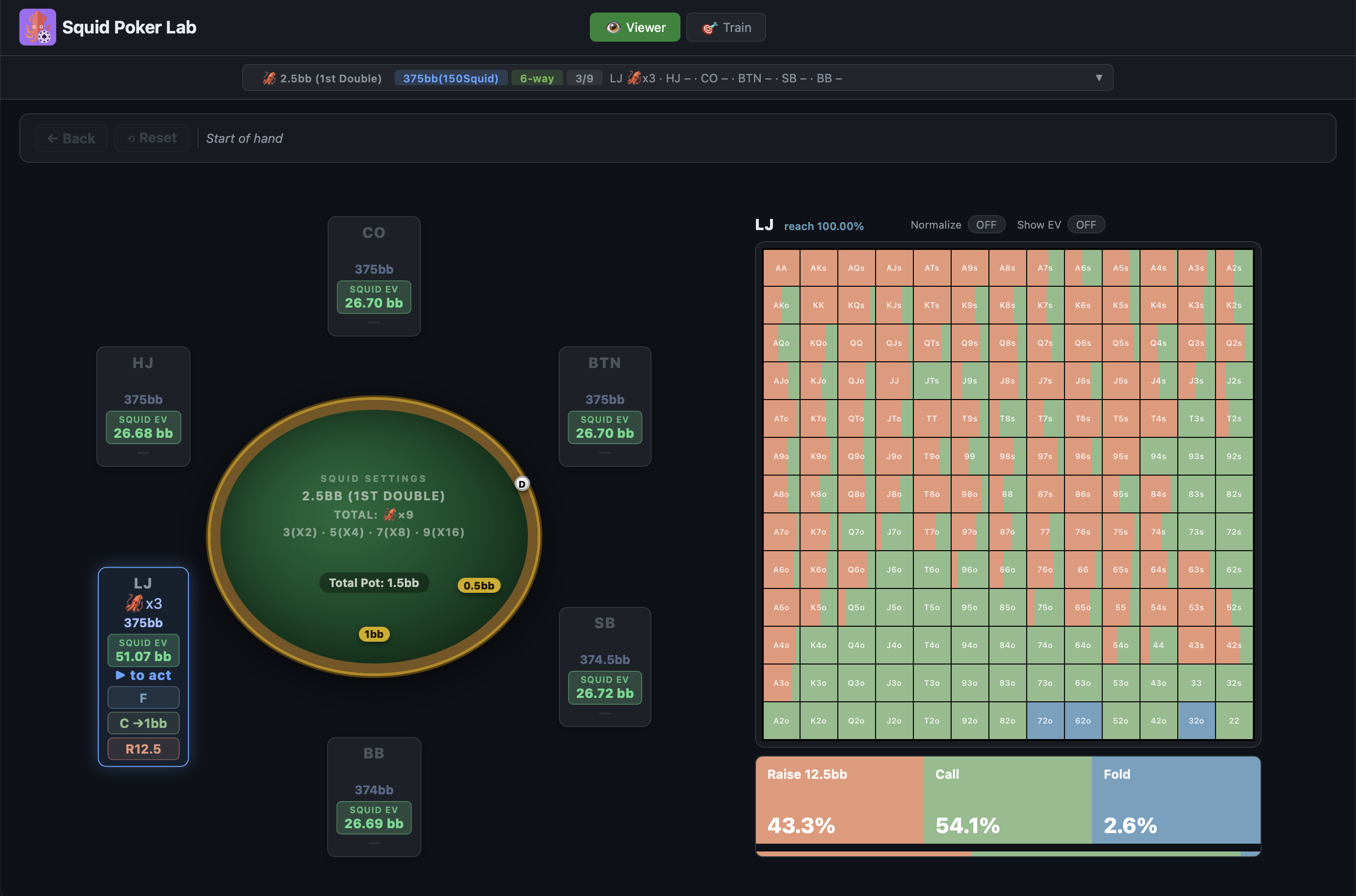
In this scenario, LJ is holding 3 squids with a Squid EV of 51.07bb — well above the rest of the table. The players behind LJ, especially those in position, have considerably less at stake in this squid distribution. The relative gap justifies LJ raising at a high frequency from this spot.
Low Relative Squid EV → Tighten Up
Flip it around: when your Squid EV is low relative to the players still to act — especially when those players are in position and have more to gain from winning the squid than you do — the dynamic flips completely.
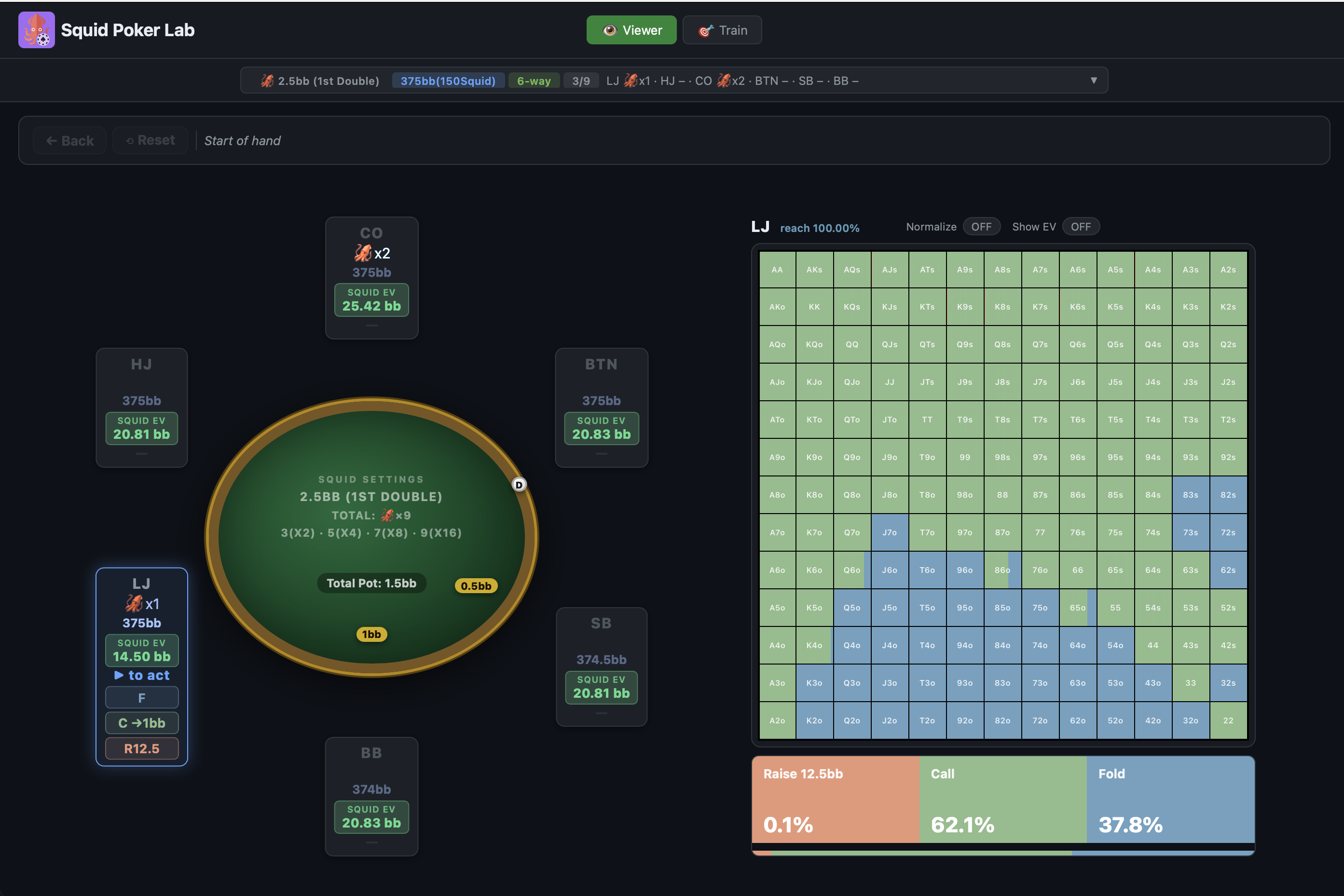
Here, LJ is holding just 1 squid with a Squid EV of 14.5bb — much less than the rest of the table, thus not raising at all from this spot. There's no incentive to build a pot when the players who stand to benefit most from winning the squid are sitting behind you with position.
The Practical Takeaway
When you're studying a spot, don't just look at your own Squid EV number. Pull up the table view and ask: how does mine compare to the players still behind me? This comparison often explains why a range is as aggressive or as passive as it is.
This is especially important in early positions or when more players are left to act. The same position can have a completely different raising range depending on who is holding what — and now you know why.